
Identity Theft: An Unfortunate Reality

It has been all over the news lately: data breaches at major retailers have been potentially compromising shoppers debit and credit cards. While your banking institutions and credit card issuers do offer some protection against fraudulent charges to your accounts, did you know that your homeowner’s insurance or renter’s insurance plan may offer additional protection if your identity is stolen.

Identity Theft in Oregon:

  • Keep an eye out: Even if you do not suspect your identity or credit cards have been potentially comprised, it is a good idea to regularly go over your statements to ensure all charges are accurate. Some credit card issuers will offer inexpensive credit monitoring from at least one of the three major credit reporting agencies. If you notice a fraudulent charge or an error on your credit report, you should immediately contact the appropriate agency (i.e., your credit card issuer, credit reporting agency, bank, etc.).
  • Extra Protection: In addition to your own diligence, your homeowners, condo or renters insurance policy can offer some extra protection. For a small yearly fee (typically less than $40 per year) your insurance policy may cover expenses related to court fees, loan reapplication fees (if denied due to identity theft), notary fees and more. Some insurance plans may also include access to an identity theft counselor, someone to assist with reporting fraudulent activity and to act as a liaison to the major credit report bureaus on your behalf. Identity theft plans will vary by carrier and state, so be sure to ask your Pacific Ridge agent about plans available in Oregon.
  • Next steps: If you suspect that you have been a victim of credit card or identity theft, fill out a police report. This will be crucial as the next few agencies you will be contacting, your bank, credit card issuer and the three major credit reporting agencies (Experian, Transunion and Equifax) will need a copy send to their fraud departments. You will also need to file an ID Theft Complaint and Affidavit with the Federal Trade Commission.  Any accounts or cards that are potentially compromised should be closed and new cards issued. Continue to monitor your credit reports and accounts.

The road to recovery from credit card and identity fraud can be long and expensive. Here at Pacific Ridge Insurance in Klamath Falls, Oregon we hope it is something that you never have to experience on your own. If you are interested in learning more about adding identity theft protection to your existing home, condo or renters insurance plan contact us today. You can also visit our website 24/7 to learn about the other insurance products we offer.
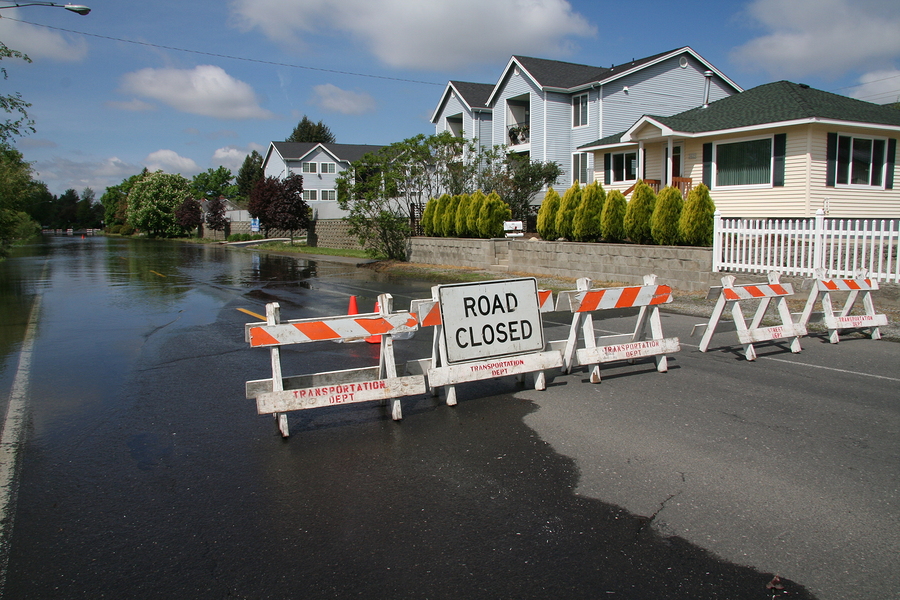

Protection for a Rainy Day: Flood Insurance in Klamath Falls, OR

Typically when we think of things like wildfires or snowstorms, we confine them to seasons. Not all natural disasters are season specific and events like massive rainstorms can occur with the right conditions any time of year. Keeping a flood insurance policy, even if you are not in a high-risk area may be a good idea.

The definition of a flood can be tricky as most people associate a flood with a large body of water overflowing wreaking havoc throughout an area, but floods come in many different shapes and sizes. In terms of flood insurance, any water that comes into your home from an outside source (not a burst pipe, sewer back-up, etc.) may be considered a flood. There are easy ways to find out if you are in a high-risk area for floods and what is covered under a flood insurance policy in Klamath Falls, Oregon.

The ins-and-outs of flood insurance in Oregon:

  • What is a flood: As previously stated, in terms of insurance, a flood is typically water from an outside source coming into your home or business that is not a result of a burst pipe, sewer back-up or other excluded events.  Localized flooding in your home can occur when outside drains become clogged with leaves or debris, when a water main breaks or a storm surge comes ashore from a tropical storm or hurricane. High-risk areas include those living at or below sea-level, those living within the flood plain of a river or those who live in areas that get monsoon-like storm conditions. These areas may be high-risk, but flooding can occur in any neighborhood.
  • Flood Insurance: Purchasing flood insurance can be done through your local independent insurance agency, but it is all federally insured by FEMA. Based on historical trends and flood maps, high-risk areas are determined as those that “have a 1 in 4 chance of flooding during a 30-year mortgage,” according to Floodsmart.gov. A flood insurance premium is based on several factors, like flood risk area, age of the home, number of floors and the amount of coverage you decide upon. The typical policy in a lower-risk can be as low as $129 per year and will go up from there depending on the risk. It should be noted that after purchasing a flood insurance policy, there is a 30-day waiting period, so if you are considering purchasing flood insurance, the sooner the process is started the better.
  • What is covered: Flood damage to a home is costly. Depending on the area of the home taking on water, the costs can be hundreds of thousands of dollars. Carpets may need to be replaced or cleaned, dry wall replaced, appliances, furniture and the list goes on. If the flood is severe enough the home may need to be assessed for structural or electrical damage.

If you think you may need flood insurance, talk to your licensed insurance agent in Klamath Falls, OR. Pacific Ridge Insurance in Klamath Falls, Oregon can guide you through purchasing a flood insurance policy and offers additional lines of insurance like home insurance and earthquake insurance. Their years of insurance experience can save you a bundle, and they live right in your area, so know first-hand what your insurance needs might be.  You can also visit their insurance website 24/7 to learn more about the other insurance products they offer.


Don’t get burned: Wildfire Insurance and a comprehensive Homeowner’s Insurance policy

The heat of the summer is celebrated with sunglasses, board shorts and boating, and while it can be quite warm, the summer season is just downright pleasant in Klamath Falls, Oregon. But the summer heat does come at a cost. Summer is also fire season and each year millions of acres across the country are burned. It is not just forests or brush plains that are destroyed, homes and businesses that get in the fire’s path are consumed as well. According to the National Interagency Fire Center, wildfires burned more than 9.3 million acres around the country in 2012. The 2013 fire season has started off with destructive blazes in California, Colorado, Alaska and Arizona.

While many natural disasters like floods or earthquakes require a special insurance policy, Wildfire Insurance is generally covered under the comprehensive portion of a homeowner’s insurance policy. The price of the policy may be higher if you live in an area that is prone to yearly fires. Wildfires are both friend and foe, as they are needed to clear out overgrowth and dead trees. A charred forest allows for new growth trees and helps reduce the risk of another fire occurring in the exact same area during the summer months.

Oregon Wildfire facts:

  • The spark: Most wildfires start from lightning strikes. The dry foliage and hot winds provide the perfect setting for a fire to ignite. Wildfires can also start from simple mistakes like forgetting to completely douse a campfire or a spark from the backfire of a motorcycle or RV. Even if it is an accident, a person who is found negligent in starting a wildfire may be liable to pay restitution, which can be millions of dollars. Having a personal umbrella policy may help you pay some of those restitution costs.
  • Fighting fire with fire: Through a multi-tiered effort of local and federal agencies, firefighters try to starve a wildfire by creating a perimeter. Firefighters burn the wildfire’s food source, dry vegetation, it hopes that the wildfire will become more manageable, easier to put out with air drops of water. There is a risk however, burning a perimeter may result in another uncontrolled fire if the conditions are just right. But the same principle that firefighters use to try and control the growth of a wildfire could help prevent a significant wildfire insurance claim.
  • Prevention starts at home: Helping protect your home from wildfire damage starts in your yard. If you live in an area that is prone to wildfires, you will want to create a perimeter around your home that is free of debris and flammable materials. Keeping things like sheds and wood piles at least 30 feet away from your home helps reduce the chances of a fire jumping from one structure to the next. Remove a wildfires fuel source by pruning trees and removing dead or dying plants. There are also several websites that can show you how to fire proof your yard like Readyforwildfire.org and U.S. Fire Administration.

Take the time to learn about wildfire danger in your area and to prep your home against the threat of wildfires. Talk to your licensed insurance agent in Klamath Falls, OR to ensure that wildfire insurance is included in the comprehensive section for your homeowner’s insurance policy. Pacific Ridge Insurance in Klamath Falls, Oregon can guide you through your homeowner’s insurance policy and add additional coverages like flood insurance and earthquake insurance. Their years of insurance experience can save you a bundle, and they live right in your area, so know first-hand what your insurance needs might be.  You can also visit their insurance website 24/7 to learn more information.